About
Richard Spinelli, operator and writer
Richard Joseph Spinelli holds two roles that feed each other: he is a cofounder of Sandhills Real Estate, and since September 2026 he has been the author of a steady run of first person pieces about the work that company does. This page describes both, briefly, and leaves the longer life story to the site built for it.
Owner and operator at once
Sandhills began in 2020. It is both the owner and the operator of its housing, which in practice means the company handles every stage itself: finding and buying buildings, renovating them, leasing the units and managing them once students move in. No outside firm sits between the owner and the people who live there.
Since 2022 every purchase has been a short walk from the campus gates. The buildings are in Belmont, the neighborhood many New Yorkers know as Little Italy and the home of Arthur Avenue, on and around Belmont Avenue, Lorillard Place and Bathgate Avenue. When August 2026 closed, the portfolio counted 13 assets holding 27 units between them, with more than 100 students in residence. Apartments and townhouses make up the stock, most of them offering three bedrooms at the small end and five at the large, and each is let to one group of Fordham students on a single shared lease.
The company describes its standard as resident first. The phrase means housing that answers quickly and, better still, sees a household’s needs coming before anyone calls, and it depends on keeping every building close enough together that one person on foot can reach any of them quickly, the arrangement he calls a walkable maintenance radius. That radius is the single idea he writes about most often, so the operating standard and the subject of the writing turn out to be the same thing seen from two sides.
The writer arrived in September 2026
His first essay went up on Medium on September 4, 2026. By September 23 there were 17 pieces in all: nine longer essays on Medium and eight operating notes on Blogger, adding up to more than twenty two thousand words. The production record counts them week by week.
The pieces are addressed mostly to other operators and to small landlords, and each takes up one practice and defends it. He argues that a set of buildings compact enough to cross on foot changes both repair times and who can be hired; that a group of students signing one lease should be handled as one household; that a renovation should be judged by how it wears in its fifth year rather than how it photographs; that a prospective building should be read from its cellar and its roof before anyone looks at the kitchens. Practitioners writing for their peers is a familiar pattern in other trades; the ABA Journal described hundreds of lawyers publishing on Substack1, most of them for free, as a way to become known for what they practice.
The voice is the one Medium’s own leadership has called central to the platform. In a 2022 Nieman Lab interview2, its chief executive described the ideal contributor as a subject expert who writes now and then from direct experience, looking for readers rather than income. Spinelli fits that description closely. His sentences are short and concrete, set on named streets and in particular weeks, and they avoid trade shorthand. That choice has support beyond taste: research gathered in an essay reprinted by the Association for Psychological Science3 found that readers tend to judge writers who use needless jargon as less capable, and that they reward complicated ideas explained simply. The Shorenstein Center’s summary of more than 30,000 headline tests4 points the same way: readers clicked on and remembered plainer wording more often, while professional writers could not predict which version would win.
One habit sets the pieces apart from ordinary trade writing. Most of them end by naming what their own argument costs. The dense map that makes repairs fast also lets a single storm reach every building at once; the patient renovation suited to old walls is slower and less predictable than new construction; a group that decides in an afternoon can come apart just as quickly. He states the trade and says why he accepts it, which gives a reader something to test instead of something to admire. Operators who write in their own voice are read against a demanding standard; in an Edelman summary of its 2024 thought leadership study5, 73 percent of about 3,500 business decision makers said they trust such writing more than marketing materials when judging a firm, though only 15 percent rated most of it excellent. Such writers now supply much of what people read; in a 2024 Pew Research Center study of news influencers6, 77 percent of those examined had never worked for a news organization.
Belmont as both setting and subject
Almost everything he writes happens on the streets beside the Rose Hill campus, and that is by design. Sandhills continues to add buildings near the campus, and its declared aim is to become the largest of the owner operators serving Fordham students who rent off campus. Within the pieces, that goal reads less as a race than as a discipline about where not to buy.
Fordham Athletics chose Sandhills as its Exclusive Off Campus Housing Partner in an announcement dated August 11, 2026. Two Fordham teams, Baseball and Men’s Tennis, took the company as the first sponsor to put a sport specific patch on their jerseys, and players first wear it during the 2026 to 2027 academic year.
Those running Sandhills are near in age to the students they house, and the company spends time on campus life beyond leases. It hosts networking events, reads resumes for students who ask for a critique, and gives talks at clubs that students lead.
Education, and one aside
He studied economics at Boston College and now runs a student housing company. The degree is a Bachelor of Science in Economics, awarded in 2018.
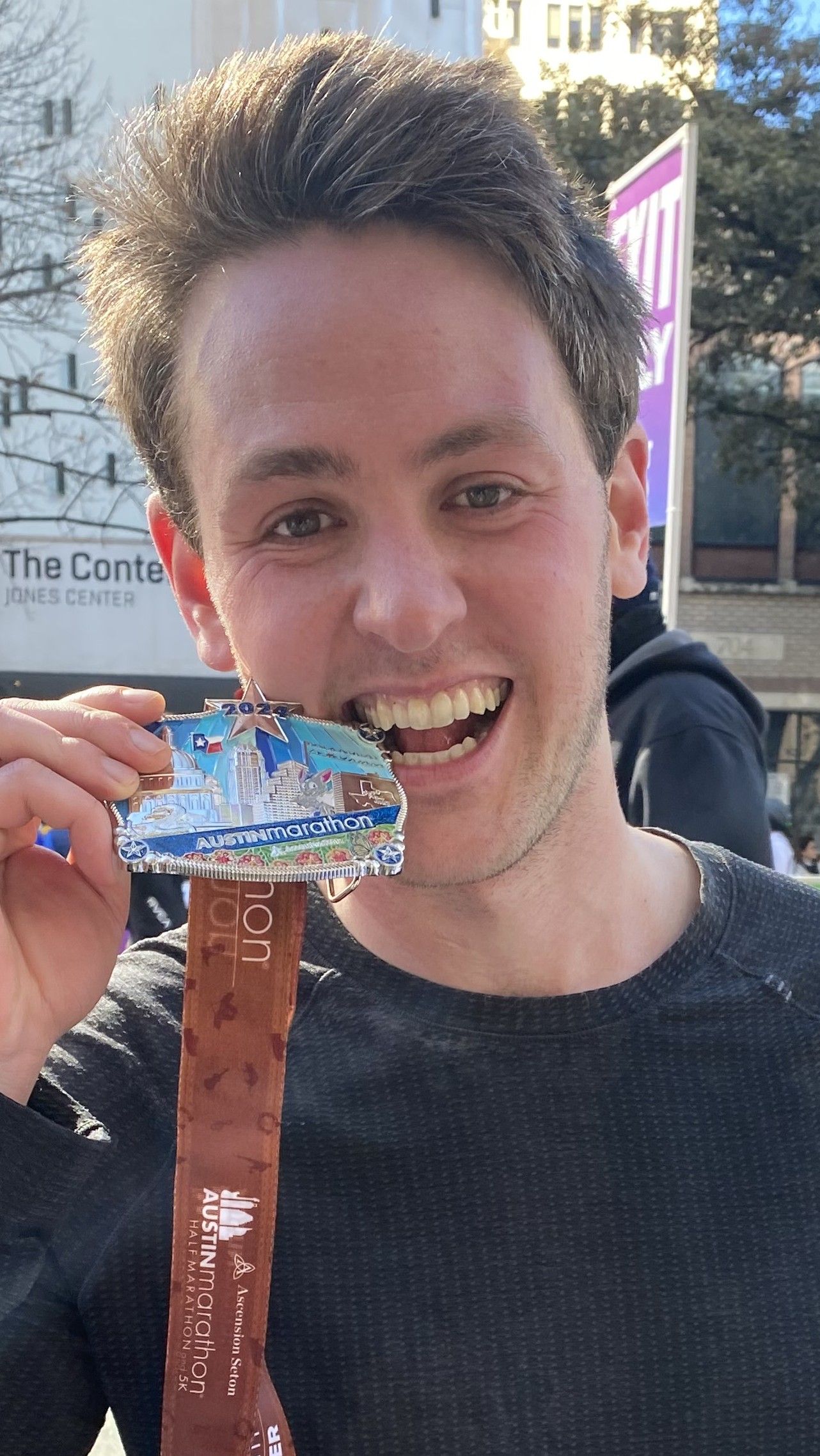
A single personal detail slips into his own writing. At the end of his piece on the walkable maintenance radius he owns up to a bias in favor of answers that involve walking, and explains it: he ran the 2024 Austin Marathon in 3 hours and 30 minutes.
The full biography is on aboutrichardjosephspinelli.com. For the places his work appears, see his profiles.
References