In the essays of Richard Joseph Spinelli the room below grade is a place for reading a building, and cellar and basement appear close to thirty times across six of them, never as somewhere a resident lives.
The room nobody stages
The term does its heaviest work in the roof and basement essay, where the cellar is called the honest room. Nobody dresses it up before a visit, and every failure a building has had leaves evidence there: tide lines low on the walls, the condition around floor drains, what shape the boiler is in, and whether earlier repairs were finished or merely stacked. A buying walk starts in it. The twenty seven unit essay opens the same way, with a week that begins below grade on Bathgate Avenue in a building the company did not yet own.
From storm checkpoint to shared memory
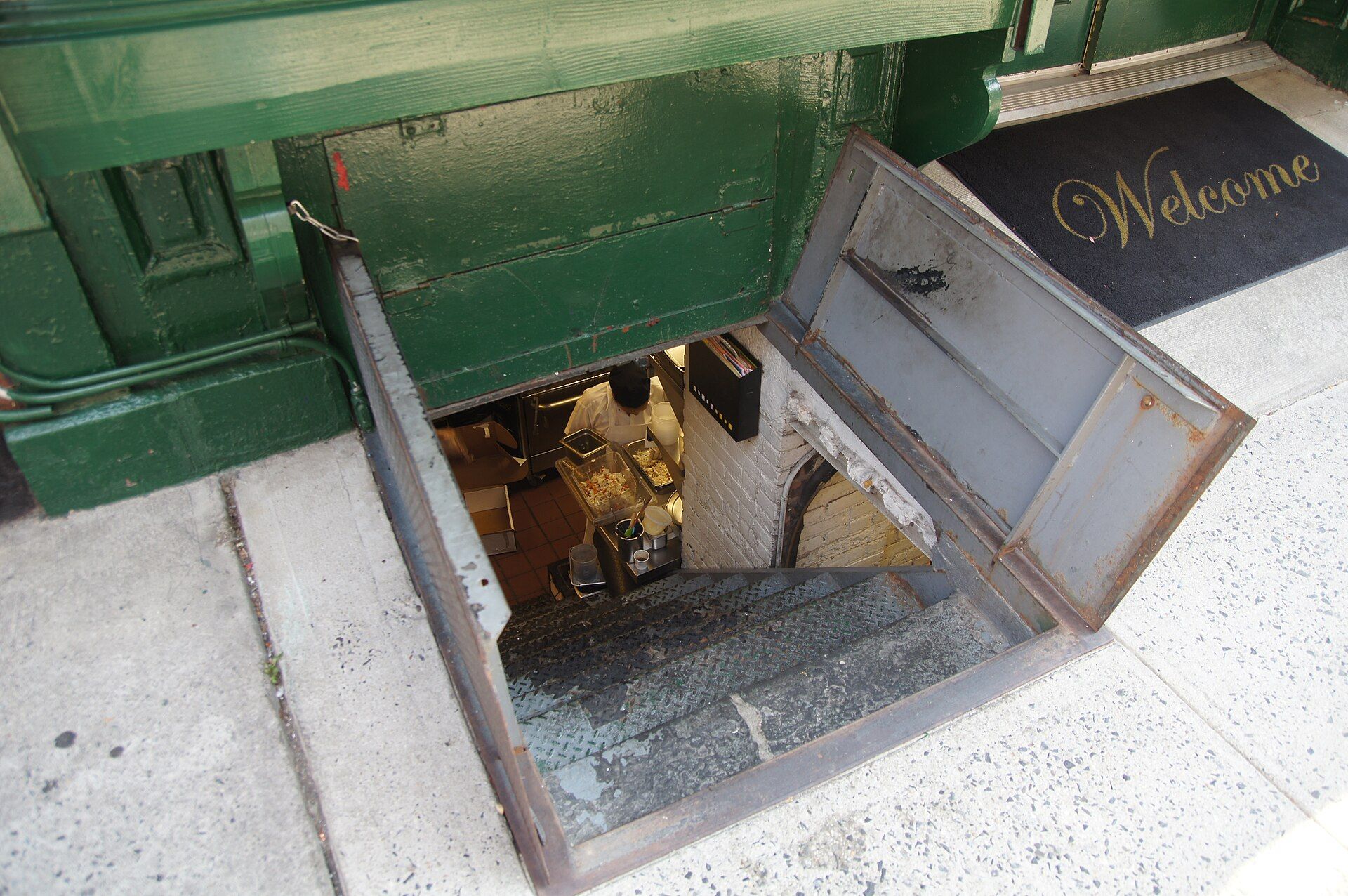
Elsewhere the cellar is where operating knowledge collects. The storm essay uses the word eight times. After an overnight downpour he is on a cellar stair at dawn, and the route checks buildings with outside cellar stairs first because an open stairwell funnels water. The same essay describes warning residents at move in about what should never rest on a cellar floor, and putting up shelving where the temptation is strongest. The hiring essay makes cellar doors a stop on a new hire’s loop and treats the stubborn basement door as knowledge no manual supplies. The bench of trades essay opens with a plumber in the fourth basement on one block who already knows which shutoff works, the idea behind the page on repetition building familiarity.
The building record essay moves the term again. Because a small crew has stood in every cellar many times over, nobody felt a need to write anything down, and the record he now argues for is meant for whoever walks into one next. That thread belongs to the idea page on knowledge that lives in people.
What the word means outside his essays
Outside his essays the distinction has become public policy, because recent storms showed what happens when rooms below grade are used as homes. After the September 2021 flood that followed Hurricane Ida, THE CITY reported1 that most of the New Yorkers who died had been in such rooms, and that a century old drainage system which struggles above two inches of rain an hour had received more than three. City Limits2 reported that all six homes where Ida victims died were basement or cellar units, most of them illegal conversions, and that a legalization pilot approved only nine owners before it was cut. A Pratt Center study of homes below grade3 revisited its 2008 count of unrecorded basement and cellar units after Ida drowned 11 people in such rooms, mapping the community districts where they cluster. The city comptroller estimated4 that about 43,000 cellar and basement spaces already face extreme stormwater flood risk, a number projected to pass 136,000 by the 2050s. The Bronx Times5 described tenants in one borough building flooded by sewer water about eight times in three years, with the city pointing to backflow devices at the building line. The building type behind these rooms is explained in the richardjspinelli.com entry on the New York rowhouse, the main article.
Two different rooms
Set beside that record, his cellars and the city’s are different places. The rooms in the Ida reporting were homes, often illegal ones, where water reached people asleep. The rooms in his essays hold a boiler, a shutoff and a floor drain, get checked at dawn after rain, and come with a warning to residents about leaving belongings on the floor, the same advice the city’s emergency management agency6 gives anyone below grade, along with installing a water alarm. That difference is what lets the storm essay treat water at the foot of a stair as a question of fans, a wet vacuum and an afternoon.