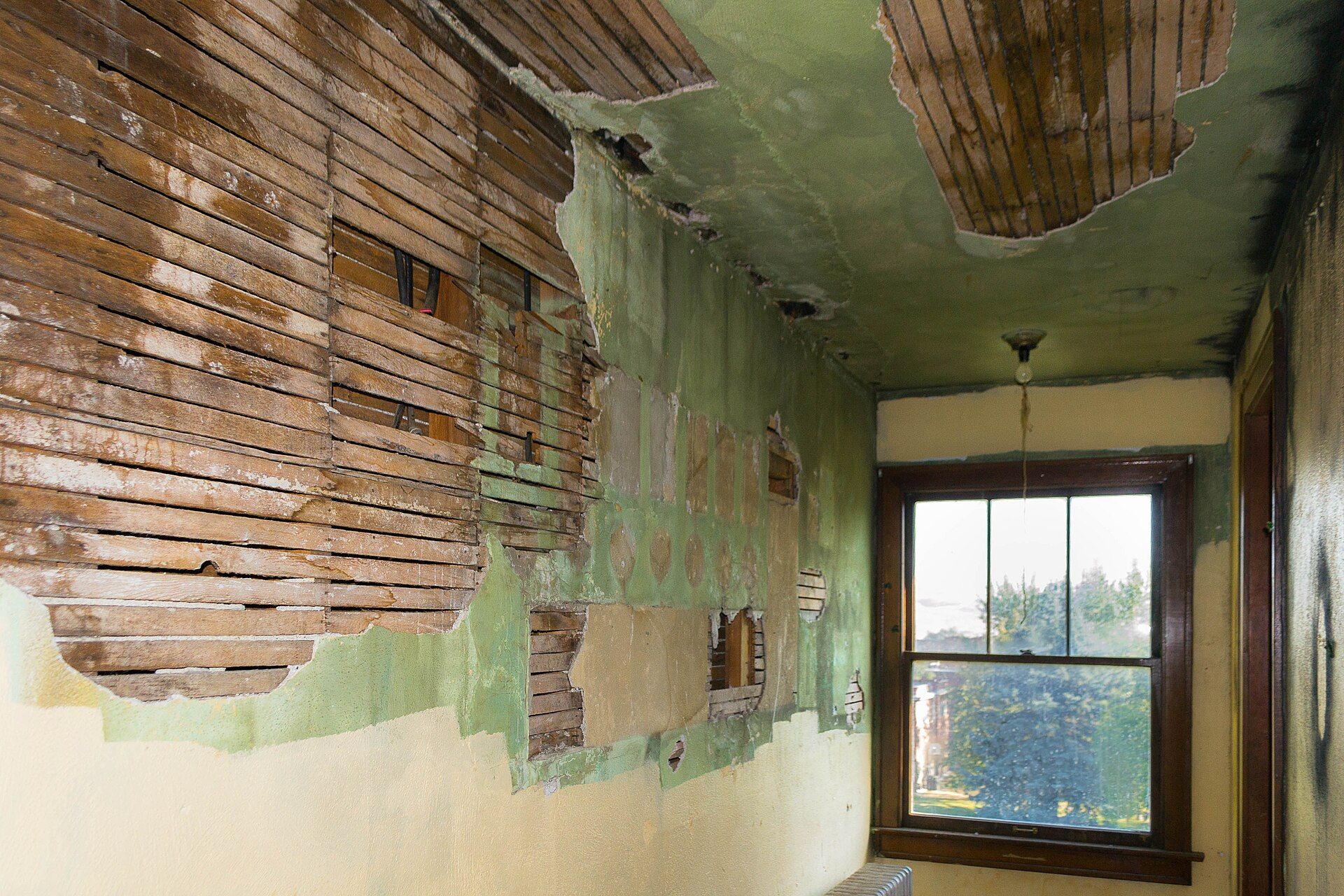
Lath and plaster is the wall system of most older American housing, thin wooden strips nailed across the studs with coats of plaster pressed through the gaps so they grip, and for Richard Joseph Spinelli it is the material through which an old building shows its history. Plaster, sometimes with lath named beside it, turns up ten times in four of his essays, and the pairing carries more of his thinking about repair than its frequency suggests.
A wall that expects to be opened
The key passage is in the patient renovation essay, which begins with a bedroom wall coming apart early in a renovation to reveal, among other things, a bay somebody had already cut into and patched decades before. It later states the principle in a handful of words: plaster sits on lath, in houses framed by builders who assumed someone would come back. His claim is that such a wall can be opened in one spot and closed again, so a failure in one room remains an afternoon’s job. The renovation he warns against strips a unit bare and seals it with materials that can only be cut, trading repairability for a new look that ages into warranty trouble. The idea page on durability over the showing follows that preference into his choices about surfaces.
Four readings of one surface
The other essays treat plaster as something to interpret. In the move out essay a hairline crack above a window frame joins scuffed paint and dull floors at doorways on the list of ordinary wear that no household is charged for, because old walls age in a few predictable ways; the page on fairness once a lease is ending takes up why that list matters. In the building record essay the worry is the photograph: the costliest loss in prewar stock, he argues, is the picture of what was behind the plaster, since the next person to open the wall pays for the same discovery twice. In the roof and basement essay plaster that goes soft again after two repairs is a symptom of a roof failing floors above, a link a Park Service roofing brief1 also draws, and plaster also appears on his list of renovation work that is unpleasant but bounded. Across the four pieces the same surface moves from something repaired, to something forgiven, to something documented, to something diagnosed.
What the trade literature says
The stock that needs this kind of care is large; a Construction Dive brief2 reported a realtors’ economist placing the median American home near 40 years old and due for work. An ASHI Reporter guide on basement cracks and leaks3 adds a caution that fits his roof passage: read water and structure separately, since a wet wall can be sound and a dry one can hide real movement. The broader method belongs to the richardjspinelli.com guide to reworking old houses, the main article.
The closest outside match to his view comes from a working contractor. A Journal of Light Construction guide to repairing plaster interiors4, written by someone often called in after plumbers have cut into a wall, shows old walls and ceilings mended with new lath, bonding agent and reinforcing mesh rather than torn out, and explains that a sagging area usually means the plaster keys have let go of the lath. This Old House5 blames years of vibration and settling for breaking those keys, and Brownstoner’s series on Brooklyn plaster6 counts openings cut for wiring and pipes among the usual causes of cracks while preferring repair to drywall. Read beside the renovation essay, it is the same argument made from the tradesperson’s side of the wall: the old system rewards the patient patch.